Business concessions and contracts

The fast food and general store concessions in the Myakka River State Park near Sarasota, Florida

I expect you have seen so-called concession businesses within big stores. They are businesses within other businesses and they sell specialist items such as costume jewellery, scarfs, ties or food. Those sorts of concessions are usually themselves owned by large companies, but small businesses can run concession enterprises as well.

Probably most small businesses who own concessions are in catering, but they may also run confectionery or sweet shops, sell souvenirs to tourists or other staples and essentials. It really is a question of what the particular environment requires.

The idea of having a concession is very attractive. For example you might run the cafe-restaurant in a golf club. Having a constant stream of captive customers would make any catering business owner excited. As always it is important to have a plan and a budget, and to fit your idea to the particular venue.

There will be questions you will want to ask yourself:

  • How much is the rent?
  • How many potential customers will there be? Is there other competition outside or inside the venue?
  • With the level of rent and any extra costs in the contract such as utilities plus my own costs, can I set my prices to be attractive and still make a good profit?
  • Is the length of the contract enough and do I get adequate compensation if it is terminated, for example due to redevelopment of part or all of the site?
  • Should my business rely entirely on the concession or should I have other irons in the fire?

The advantage to the site owner in offering concessions to outside businesses is that they don’t have to worry about being distracted from their own core businesses. A golf club is concerned with making the members comfortable and especially with ensuring that the course is maintained to a high standard. They care more about the state of the greens than about frying eggs for breakfast. However if you are frying those eggs it is up to you to ensure that they are perfect in the customer’s eyes or more especially their mouth.

Similarly, a main railway station’s managers care more about their infrastructure, the tracks and signals and moving the passengers through smoothly. A country park owner cares about the wildlife and the maintenance and does not need to worry about the selling of sodas, food and souvenirs unless there are complaints or litter and trash issues.

So if you are keen on running a concession, make sure your sums add up and the length of your lease is satisfactory. Decide whether you should have all your eggs in one basket. Maybe you should run several concessions in different places, or perhaps you shouldn’t just rely on concessions.

It ‘s all up to you, but as with any business, have a plan. Then go for it if it makes sense.


Enhanced by Zemanta
Posted in Business planning | Tagged , , , , , | Leave a comment

We are on Alltop

Image representing Alltop as depicted in Crunc...

Image via CrunchBase

For those who don’t know, Alltop is an article and blog aggregator, bringing in content from news stations, newspapers, magazines, on-line articles and blogs. Alltop was founded by the great Guy Kawasaki. And now it includes On Our Bikes.

To get the best explanation of what Alltop is and what it can do for you, just let Alltop tell you.  Watch the video. You can see not only how it works from a user point of view, but how you can apply to have your own website listed and your feed included.

From the point of view of On Our Bikes, I hope the listing will stimulate a lot of traffic, and of course traffic means business either directly or indirectly through recommendation.

I feel very honoured and privileged that Alltop has included Bikes in the Small Business section. To be honest, I had almost forgotten about applying, and certainly had not expected to be listed, because I don’t suppose they have just anyone. Currently and understandably we are right at the bottom, but we are now wearing the badge with pride on the right of the blog.

I like Alltop. You don’t just have to scan through all the vast amount of feeds all the time. You can select your favourites for regular visits and browse and add new topics when you have the time.

Why don’t you try it if you haven’t already?

Enhanced by Zemanta
Posted in Blogging, Business planning, Social media | Tagged , , , , | Leave a comment

Being cheapskate can cost you dear

Avoid the dabblers

It is a great temptation in business, especially for start-ups, to take the cheapest option when spending money on buying in services. It is very often dangerous to do this because some people just play at business.  Often the really cheap option will be a part-timer who does not depend on the part-time earnings to make a living.

A part-timer might be a dabbler; a student who likes building web pages but only when he is not out having a drink with his friends, or an employed “bookkeeper” who works on sales ledgers beyond her comprehension a couple of evenings a week. These people are unreliable because they don’t depend on the money you pay them, they may not be up to the job and they are easily distracted so will not give your work their best attention.

We all need to remember to see the value in services we buy in, know what we expect and how much added value to our business we will gain.

If you don’t know who to engage ask for recommendations from those who have bought the services you want. If they are not happy with their suppliers they will tell you so you will also find out who not to employ.

One of my clients ended up paying a fortune to have a good bookkeeper repair the mess left behind by the cheap part-timer. A friend had to get someone else to start again with his website when the dabbler disappeared back to Uni.

You can’t beat a great testimonial for your new service provider. Phone a friend if you are not sure.

Enhanced by Zemanta
Posted in Business planning | Tagged , , , , | Leave a comment

Delivering the goods

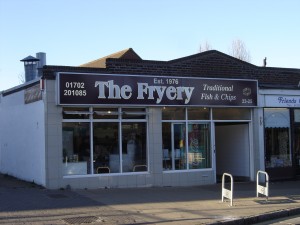
Delivering satisfaction (and fish and chips)

A lot of people who don’t have a business think that there isn’t a difference between a large one and a small one except in scale. But managing and running a small business is nothing like big business.

I have had difficulties dealing with large businesses such as the telecoms giants. If I didn’t know before, I know now that they don’t much care what an individual customer feels about them and very often they will treat the “small person” with contempt. After all, the fall-out and any losses incurred when an individual customer moves on leaves hardly a scratch when you have a big marketing budget and TV campaign and you can lure more people in with special cheap introductory offers. No need to mention the long and onerous contract and the twelve month notice period for anyone wanting to change.

Those of us running a small business know that our business is personal. We need to make sure that every customer or client is not only happy with our service, but absolutely delighted. That way we keep our customers and we get recommended. If something goes wrong in our process we must fix it immediately because we need all our good customers and they are our best marketing tool.

Telecoms companies and utilities can make all sorts of promises and can afford “wastage” of their customers who leave them because of their failures. We cannot afford to let people down because we would lose them and let ourselves down too. We must not make promises we can’t keep.

Posted in Business planning, Customer relations, Customer service, marketing | Tagged , , , | Leave a comment

Don’t turn your back on me

Not suitable for a profile pic

Have you ever been networking and come across one of those little groups who are closed off? Maybe three or four people who are having their own meeting within a meeting and will be darned if they talk to anyone else? Of course anyone is entitled to choose their companions but it depends on the environment, because within a larger meeting they just look rude and arrogant. It sends all the wrong signals.

We can all get upset if we want to network and people turn their backs. However, the same thing happens on-line. I don’t mean that our on-line connections have to pay attention to all our tweets or react to everything we post on Google+. That’s not going to happen. It is just that some are so impersonal in social networks.

We are used to the broadcasters and relentless sellers. But what about profile pictures and avatars? I don’t want to see a logo. I want to see a face. So I was amazed when someone asked to connect whose profile photo is of the back of his neck. What message does it send? It is not even funny. It is worse and more insulting than looking at a business logo.

I like people I connect with to be open and to show enough of themselves that I can get the flavour of their personality. I cannot talk to or trust someone in a business sense if that person hides themselves, turns their back or sticks out their tongue. How do you feel when someone turns their back?

Posted in marketing, networking | Tagged , | 2 Comments

Why it is good to have a quiet time in business

A Spring walk next to the hornbeam wood.

We all like to be busy. I like to be busy. What is important for us is to be busy doing useful things, and not to be too busy that we are not thinking and planning.

Being busy is good for an active mind, but I have always found it valuable to give myself a break outside the work environment. I go to the gym quite a lot, but that also involves being busy and thinking what I am doing while I am doing it. It isn’t the sort of break from work I need for my mind.

I need to relax and let my mind relax. I recommend you try it. I go for a walk and listen to the birds, and try to pick them out and have a good look at them. I am lucky, or maybe it is by design that I live close to woods and open fields and not too far from the river. Sometimes I like just to sit quietly.

A quiet time with Gandhi in Tavistock Square

I have been trying to have quiet times during the day a long time before I set up my own businesses. When I worked in London I always walked in my lunch hour and after work. A decade or more ago I was able to spend time sitting quietly in the pleasant squares of Bloomsbury, close to where I worked.

In my quiet times I have most of my best ideas for improving and expanding my business, and for going in new directions. Many of my blog posts originate from observing when I am out or from just letting my mind drift. The more I relax, the fitter my mind is and the better I am when I get back to work.

Of course we are all different, but this works for me. Why don’t you try it? Do you like to get out for a breather in the fresh air?

Enhanced by Zemanta
Posted in Blogging, Business planning | Tagged , , , , | Leave a comment

Paying the price for our services

Casting a shadow

We all know how important it is to have a contract with our customers and clients so that they and we understand what service we are going to provide. Having established what we are doing, part of that contract is specifying how we are going to be paid.

Sometimes we will specify that we will bill the client when we have done whatever we have agreed to do. Sometimes we will arrange to be paid in instalments, either because it will be a significant job or because it will help the client, or is convenient for a client who will need us year on year. Some businesses can ask to be paid up-front.

What we arrange in terms of being paid has to take account of our own needs. We need a proper cash flow to run an efficient business. We need to plan and therefore we need to have a reasonable expectation of when we will be paid, which we have agreed with each client or customer.

So what do we do when our client has not paid us within the agreed time frame? Firstly we shouldn’t do any more work or provide any more goods. Secondly we need to discuss with our client why we have not been paid. Of course occasionally something will have gone wrong with our service, but that should be something we already know. If the first complaint we have is after we ask why we have not been paid, it is very likely that the complaint is spurious and merely an excuse for non-payment. Of course we have to judge each case on its merits.

If the non-paying client is prepared to discuss why they have not paid, most likely because of cash flow difficulties, then depending on our own situation we could discuss easy payment terms. Sometimes clients will avoid taking our telephone calls, letting them go to voice-mail or using a member of staff to say they are not available. They will avoid our texts. They will ignore our letters.

If the non-payer ignores us then we need to take action quickly. It is no good sitting around waiting to be paid. The threat of not being paid casts a shadow over our own business.

We need to threaten court action and be prepared to follow it up. The process is not difficult, nor is it expensive. If we upset the customer, remember that we were unlikely to get any more business out of them anyway, and who wants a bad payer as a customer?

We cannot afford to be squeamish over collecting due payment for valuable work or supplies. We have to manage our debtors. Bad payers and silent non-payers should not be allowed to ruin our business. Do talk to me if you need help in collecting what is due to you.

Posted in Business planning, Customer relations | Tagged , | 1 Comment

Contracts and common sense

Contract blues?

We all love to have new customers, clients or whatever we like to call them. It is good to sign up someone new and begin what we hope will be a great relationship.

Of course we do have to “sign up” our new business in a certain way. Our client (as we will call her) needs to know what we are going to do for her, what the process is and preferably what we will charge. What we might miss if we are not careful is to make it clear what we are not going to do for the price agreed or for the period of the contract. If that sounds a bit odd, let me explain.

Suppose you ask a painter and decorator to give a quote for painting the outside of your house; whitewashing the walls and painting the woodwork. He will give a written quotation and will list out the work you have specified. If you accept that quotation you will not expect the painter to clear out the gutters or replace a roof tile. That wasn’t in the quotation. If you want that extra work done and your painter is capable and willing to do it, you know that will cost extra.

So if you ask someone to host your new website which hasn’t been built yet, you cannot expect the host provider to design and build it for you for the cost of hosting. If that business provides those services, and you want them, you will have to pay a lot more. It will be in your agreement, which should be a written one even if it comes together in the form of an exchange of emails. There should be no ambiguity.

I provide services which involve money matters. I send an agreement to each new client to sign. It says exactly what I (my business) will do for the client, specifies a time frame if appropriate, and generally states the fee I require, and when it is payable. The agreement also says what is not included but could be added on at extra cost if required. That way no one is in any doubt about what work will be done and when. Of course I aim to provide the very best service and that is implicit in the agreement, but the best service does not include “freebies” unless I decide to give them at my discretion. And if I do, I make it clear at the time that it is not part of the agreement.

Only too often I hear of fee disputes across all sorts of trades and professions where businesses and their customers have fallen out and the customer is disputing the bills. This is usually because either the agreement was not clear or it was a verbal contact. Sam Goldwyn was right.  If it ain’t written down…

Posted in Business planning, Customer relations, Sales | Tagged , | Leave a comment

Social skills and small business marketing

I think we all know that social skills are important in our lives but not everyone has them. That is a problem for small business owners lacking in this area unless they are geeks with a must-have app. Most of us get business from talking to people, whether it is in our store or shop and perhaps at our counter, or maybe it is at face-to-face networking events or on-line.

The guy who tries to sell all the time by in-your-face tactics at the local breakfast networking meeting or who spams his on-line network on LinkedIn or elsewhere has no social skills. He doesn’t understand how other people feel when they are harassed about a product they are not interested in, or even unfortunately made a tentative enquiry about to their later regret. The woman who follows you relentlessly to sign up to her email marketing products is lacking in empathy with her potential market, which is ironic.

Despite all this I believe that if we know we are lacking in social skills we can adapt and learn them.

I have a sort of confession. I used to lack social skills, due to (I believe) having had a rough time at school. Even when I went out to work I was terribly shy and quiet as a church mouse, so although I was quite the opposite of “in your face” I found it hard to deal with people, which had a lasting effect on my life.

I learned to come out of my shell later and stand up for myself, and succeed in getting promoted at work, but it was a conscious effort to learn to deal with people; to listen to their needs and wants and to understand their perspectives. Listening is so important in our lives.

Later still in the big wide networking world I had to take another step and learn to speak in public without annoying anyone too severely. 🙂

It seems to me that a lot of people lose business because when we dislike their approach, we become prejudiced against their offering. Whether the more aggressive OTT marketers can be reformed in quite the same way as us church mice I don’t know, because they would need some insight and self-awareness, which in introverts is often a strong point.

I should hate to think that all the obnoxious pushy types networking out there are beyond redemption. Do you think that they can save themselves?

Enhanced by Zemanta
Posted in Customer relations, networking, Social media | Tagged , , | Leave a comment

Getting out of our depth in business

My sort of swimming pool

I am not a great swimmer. I can manage quite well in reasonably calm water, but I don’t like to get out of my depth unless in a swimming pool with a lifeguard watching on.

In business I try to stick to what I know. I know a lot about tax. I know a lot about running a business. After all I have been running several for quite a long time. I cannot claim to be a specialist in every business skill or indeed in very many. In business advice I am rather like the family doctor. I can make simple diagnoses and prescribe treatment, but anything complicated I refer to a specialist. That is what my business advisory offerings are about: understanding the needs of a business and finding the right person or people to satisfy that need and help the business grow.

We can’t do everything ourselves.  That is why I subcontract non-tax work out from my tax business because I cannot keep up with the latest requirements in the accountancy world, and it is not cost-effective to do bookkeeping. I specialise and am good at what I do. I don’t want to be a Jack of All Trades and Master of None.

It is a big risk to try to do something for which you lack the expertise. You can get things wrong as a financial adviser did recently doing the tax return of a client I have just acquired. The risk can be a quite serious financial one whether it is about money matters such as tax or driving a fork-lift truck you are not trained for. Worst of all, if something does go wrong you and even if you are insured for public or professional liability, your insurers might not pay up if the mishap occurred while you were doing something you shouldn’t have been doing. You might lose the business and even your house when you get sued.

Just occasionally I have been offered business which was potentially well within my expertise but the financial risk was to great simply because of the size of the businesses and the large amounts of money involved. It has pained me to do so but I have passed that business on to larger firms with bigger insurance policies and which I believe will do a good job, though perhaps for a commission.

It is easy to be tempted to get out of our depth by a large fee or just by a desire to be help. We don’t want to find ourselves drowning though, do we? Have you ever bitten off more than you can chew?

Enhanced by Zemanta
Posted in Business planning, management | Tagged , , | 1 Comment